
Ontario’s greenhouse flower business: An unsung hero of Canada’s economy
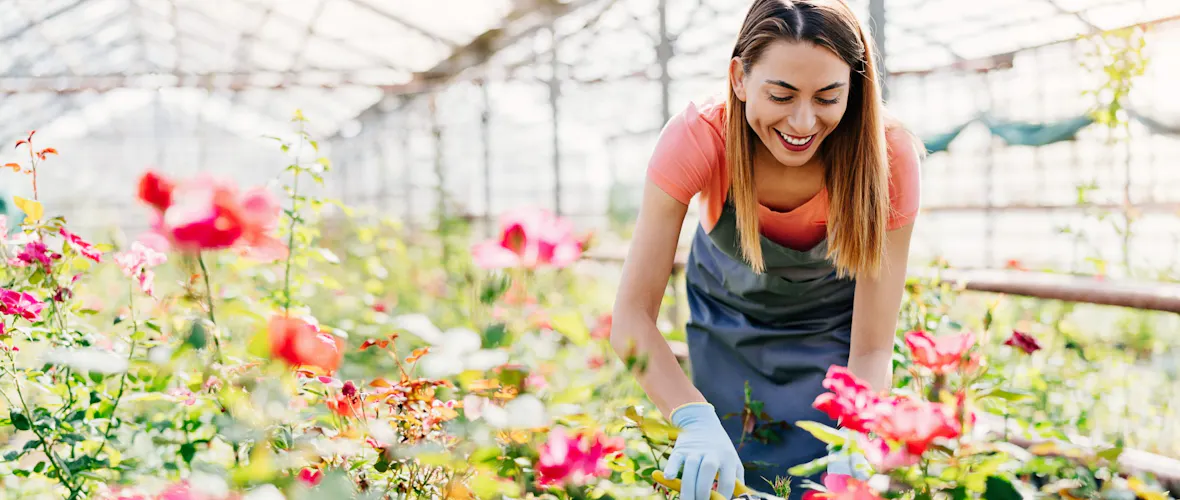
When most people think about Ontario’s big industries, automotive, real estate, or manufacturing probably come to mind first. But there’s another sector quietly powering along in the background: the province’s greenhouse flower business. While it doesn’t always make the headlines, Ontario’s greenhouse floriculture industry is a steady, innovative force in Canada’s economy, sitting at the heart of a larger greenhouse sector. Together, these businesses contribute billions to the economy every year, support thousands of skilled jobs, and boost Canada’s exports. Even with rising costs and uncertainty in trade, recent numbers show the sector is still growing, with Ontario leading the way.
In 2024, Canada’s ornamental horticulture sector hit $3.24 billion in sales. That’s up 6.6% from 2023, and about 15% higher than the average of the last four years. This shows that demand has stayed strong even after the pandemic, and growers have been able to command better prices.
Flowers are the backbone of this sector, making up nearly 70% of ornamental sales historically. Ontario alone accounted for just over half of all greenhouse ornamental plant sales in Canada last year, ahead of British Columbia and Quebec. This position of strength can be explained by years of building up clusters of expertise, innovation, easy access to energy and shipping, proximity to the U.S. market, and a tight-knit network of suppliers. All these factors help keep costs down and get products to market faster.
But flowers are just one part of a much bigger greenhouse story. According to Statistics Canada, total sales from greenhouses, nurseries, field-grown flowers, and sod reached about $6 billion in 2024, up from $5.5 billion the year before. Greenhouse products alone made up over $5 billion of that total. While fruits and veggies are the biggest chunk, ornamental crops have grown right alongside, helped by investments in advanced production, automation, and the shift toward selling year-round. In 2024, Canada’s greenhouses covered 33.3 million square metres, with Ontario accounting for 64% of that space. This scale brings real benefits—modern glass and poly greenhouses are more energy efficient and stable, helping flowers thrive.
Culture of growth
Andrew Hendriks is one of the owners and principals of Hendriks Greenhouses, a 30-acre operation in Beamsville, Ont. His grandparents bought the original 10-acre farm in 1953, a couple of years after arriving in Canada from Holland, and now the business includes herbs, vegetable starts and a wide range of plants and flowers.
“We operate the farm with all the technology of a sophisticated manufacturing plant with the added complexity of producing a perishable commodity,” says Hendriks. “We are vertically integrated from product development, sales and marketing, production/assembly, shipping, and merchandising. No marketing boards here – just live and die in the free market.”
Many of Ontario’s flower growers are also major exporters. In 2024, Canada shipped close to $1.14 billion in floriculture and nursery products, almost all of it going to the U.S. The American market is huge, well-connected, and increasingly interested in products that are local or “near-shored”— all good news for Ontario. Growers along Highway 401, like Hendriks, can get products to U.S. distribution centres in just a day or two, which is especially important for delicate items like bedding plants and hanging baskets. The same trucks that move greenhouse vegetables often carry flowers too, helping to keep transportation costs in check.
“We’ve been seeing a significant growth in export, double digit some years as an industry,” according to Hendriks. “That’s been going on for about the last 10 to 12 years, with a huge spike during COVID because everyone wanted a plant. So we’ve kind of found our solid base and we continue to build on that.”
Innovation is essential
Within the wider greenhouse world, flowers play a unique role, starting with the fact that ornamental sales are higher-margin and program-driven. Growing flowers is also capital-intensive, with investments in things like environmental controls, lighting, and robotic systems to boost yields and consistency. These upgrades mean growers get more out of every square metre and can sell for a longer season, helping Ontario compete with growers in the U.S. South and Latin America. The trend toward permanent, modern greenhouses is a sign that Ontario’s flower industry is serious about staying competitive, even as labour and energy costs go up.
Indeed, Len Ferragine of Bradford Greenhouses, which is located north of Toronto in Barrie, Ont., says it’s the sector’s commitment to innovation that ensures its strength and ability to grow.
“In order to produce and compete and ship to wholesalers and retailers, you’d never be able to produce the product that’s required,” says Ferragine, whose family business – which is now 50 years old – solely supplies the Ontario market.
“You’d never be able to compete in today’s environment with all of the manual labour.”
Today, automation is at the heart of innovation for most greenhouses. As Ferragine notes, everything from seeding to transplant lines is automated,
“If you’re not willing to change, let’s face it: horticulture, agriculture in the last 20 years has changed substantially. Never mind the last 50,” he says. “If you’re not being innovative, you’re really not going to compete.”
Industry not without challenges
The impact of the industry goes far beyond just the greenhouses themselves. Southwestern Ontario is home to a dense network of suppliers, logistics companies and financial services, all supporting and multiplying the benefits of every new greenhouse acre. Since Ontario has over half of Canada’s greenhouse capacity and ornamental sales, any gains here have a big impact on local communities.
Of course, exporting brings its own challenges. Currency swings can make Ontario’s flowers more or less competitive in the U.S., depending on which way the dollar moves. A stronger Canadian dollar squeezes margins, while a weaker one helps on price but raises the cost of imported supplies. There is also the delicate issue of ongoing trade uncertainty thanks to ever-changing U.S. tariff policies. On top of that, there are border and regulatory hurdles—live plants with soil need to clear strict inspections. Despite this, Ontario’s exports have kept growing, thanks to better compliance and stronger partnerships with retailers.
“Because we have a culture of growth and that doesn’t change with tariffs, we’ll find a way to win within the new environment,” Hendriks says. “People aren’t going to stop buying plants… The industry has proven to be quite resilient in times of recession because there’s still what I would call affordable luxuries.”
Another challenge is retail consolidation, as big garden centres and grocery chains now want suppliers who can deliver consistent volume and integrate with their logistics. Ontario’s size is an advantage here, but it also means growers need to keep investing in their operations.
Ferragine notes that viable land is becoming less available as housing developments take over farmland in Southern Ontario. And while he, and Hendriks, have succession plans, Ferragine believes that’s not the case for most businesses in the agriculture sector, which does pose a threat to its future.
“Succession is probably going to be the biggest challenge for horticulture in general in the future,” he says. “The amount of effort and time that it takes to operate a business and the hands-on that is required makes succession probably the biggest challenge for most businesses.”
Bright future
Looking ahead, demand trends are still in the industry’s favour. The gardening boom during the pandemic has settled down, but interest in outdoor living and ornamental plants keeps rising. Sales climbed again in 2024, reflecting these shifts. Ontario growers have adapted by offering more seasonal programs—think early spring perennials, fall mums, and holiday poinsettias—to keep sales steady throughout the year. Investments in better lighting and climate controls help reduce risks from unpredictable weather and extend the season for high-quality products.
Putting it all together, Ontario’s floral greenhouse business is a vital part of the broader greenhouse and agri-food economy. For banks and investors, the industry offers real assets—modern greenhouses, year-round production—that generate steady cash flows and justify further investment.
“I like the culture associated with the family business and the all-in attitude,” Hendriks says, but notes that the majority of his employees in senior roles are not necessarily family members, including in sales and marketing, growing, and finance.
“So there’s room for professionals and we are nowhere without them… The beauty of growth is you get to attract really good people that can make a career in this business and put food on the table and have a lifestyle that I think the average Canadian can get excited about.”
Ontario’s flower business is much more than a seasonal treat. It’s a disciplined, tech-savvy export industry that’s deeply rooted in one of the world’s leading greenhouse ecosystems. By blending tradition with innovation, it quietly delivers growth, diversity, and trade earnings—not just for Ontario, but for Canada as a whole.

Dan Murtha
Director & Team Leader, Agriculture Services
CIBC Commercial Banking